Showing posts with label seasons. Show all posts

Thursday, February 2, 2012

Independence (Fri) Day (a Few Hours Early)

Please head on over to The Chatelaine's Keys to see a full description of this project! 

Here are our categories: 
Plant something:
Harvest something:
Preserve something:
Waste not:
Want Not:
Eat the Food:
Build community food systems:
Skill up:  

Plant something:
         I can honestly say that the only seeds I planted this week were the seeds of curiosity in my students’ minds.  Hopefully, they’ll flourish!  Our ground is frozen one day, then muddy the next right now, though I have been considering starting a cold frame of lettuce since it has been a mild winter here in Pennsylvania.  It’s been a busy week; the end of semester one coincided with the end of my new bathroom construction; the new semester started on the last day the workmen were in my home.  I look forward to this weekend to reorganize my first floor; my classes are nicely reorganized already!  First things first!
Color Theory

Bathroom Theory
Harvest something:
         I DID harvest something!  The miracle tree in front of my farmer-friend’s house put out a nice bloom of oyster mushrooms!  I even had enough to share with a friend or two!  Yummy fresh mushrooms in late January…awesome!  I was too excited to take a picture, so I pasted in one I took during the summer.
Oysters
Preserve something:  
         Last weekend, I made a batch of clean and humanely raised beef jerky.  I used a pepper flavor that I knew my husband would like (he tells a funny story about how his best experience with steak au poivre made his eardrums burn).  I also separated a new kombucha mother from my main one, and put it up in the fridge “in case”, and have set aside a smaller jar of the kombucha to grow a mini-mother.  Those gallon jars make too much for me!

Waste Not:            
         My picky indoor cats often leave a good portion of their expensive cat food uneaten.  I’ve been cycling this out to the poor alley cat who is very happy to clean it up for them!  He’s afraid to be petted or come too close, but I’ve made a warm straw bed for him under my glider, and he’s getting regular meals.  I’ve made some very good cat friends this way in the past.  If he gets friendly enough to handle, I'll do the cat world a favor and neuter him.  Maybe he knows that.  Maybe that's why he stays out of reach!

Hobie
Want Not:
         Two days ago, I felt myself coming down with the beginnings of a nasty winter cold. My previous summer stockpiling paid off nicely. I’ve always been interested in both herbs and foraging. Last summer I teamed up with a colleague of mine who is also an herbalist, and we collected a nice supply of both elder flowers and elder berries.  SCORE!  I made a tonic using the berries and some of the flowers plus equal parts of honey and gin.  The recipe called for brandy, but juniper, a key ingredient in gin, is an anti-inflammatory which helps my achy old joints.  Well, I took a tablespoonful yesterday morning, then a tablespoonful last evening, and slept with clear sinuses and woke up refreshed after a good, comfortable night…with no sore throat!  YAY nature!  YAY elderberries and juniper!
Elderberries
Eat the Food:
         Those aforementioned mushrooms have graced my dinner plate three times this week, in various incarnations.  The last one was a GREAT stir-fry, paired with some local frozen chicken mushrooms and maitakes from the fall, some frozen organic veggies from my garden, and some finely sliced organic pork strips from the farmer’s market, all seasoned with ginger, garlic, sesame oil and soy sauce.  Of course I made too much; the leftovers went into lunch-sized freezer containers so I could carry them to school for my mid-day meal.  Win-win!

Build community food systems:
         Since Peter has been traveling for work, and has had two long-term remote placements, my fall canning stockpile isn’t being used as quickly as I thought it might.  I recently connected with an old friend who is having some challenging times, so I sent her home with a box full of goodies, and will continue to stock her up until she’s tired of them or I run out.  She promised to save my jars for me for next year!  And she loved my pepper jerky and mushrooms, too!
            I have a new friend who supplied me with my kombucha mother a month or so ago.  I was lucky enough to find a dehydrator at a thrift store, and got it to her (she’s been looking for one), so I was able to return a foodie favor.  I also shared a bag of those nice fresh oyster mushrooms with another relatively new friend, my mushrooming buddy.  He was happy to have them, and kindly offered me a few shiitake logs in the coming spring.  SCORE!
            Have you ever noticed the cosmic law that goes something like this: The more you give, the more you’ll receive?  It’s true.  There is such abundance in our world, if only we all remembered how to pass it around.

Skill up:  
         I’m a little embarrassed to admit this one, but here goes: during the past two weeks, I had a new bathroom built on my first floor for my elderly mother, who will be coming to live with us.  Prior to the construction of the bathroom, I had absolutely no idea how the plumbing worked…I didn’t know which pipe took out the waste, or if the sink water, shower water and toilet water were sent to the same place or not.  One week before the contractor arrived, I had an emergency visit from the plumber, but not before I learned exactly where the upstairs toilet went.  Since then, I’ve seen the plumbing adapted to the new bathroom, and have figured it all out.  I can’t believe I never cared before.  It’s such a simple thing…
Plumbing...etc.


Friday, June 17, 2011

In June

In June ’tis good to lie beneath a tree
While the blithe season comforts every sense,
Steeps all the brain in rest, and heals the heart,
Brimming it o’er with sweetness unawares.

–James Russell Lowell (1819–91)
Elderberry Blossoms

I'm JUST THAT CLOSE to summer vacation...
One more day...


Monday, June 13, 2011

Berry Berry Good.

Putting Food By...
It's become an obsession of mine.  With the imminent collapse of the fossil fuel system, combined with my "Buy Fresh, Buy Local" mindset, the natural course of things is to preserve foods that will be accessible sans power. Also, since I'm particularly sensitive to sugar for some reason, and have found through personal experience that freezing diminishes taste and texture, I've decided that dehydration is the way to go.

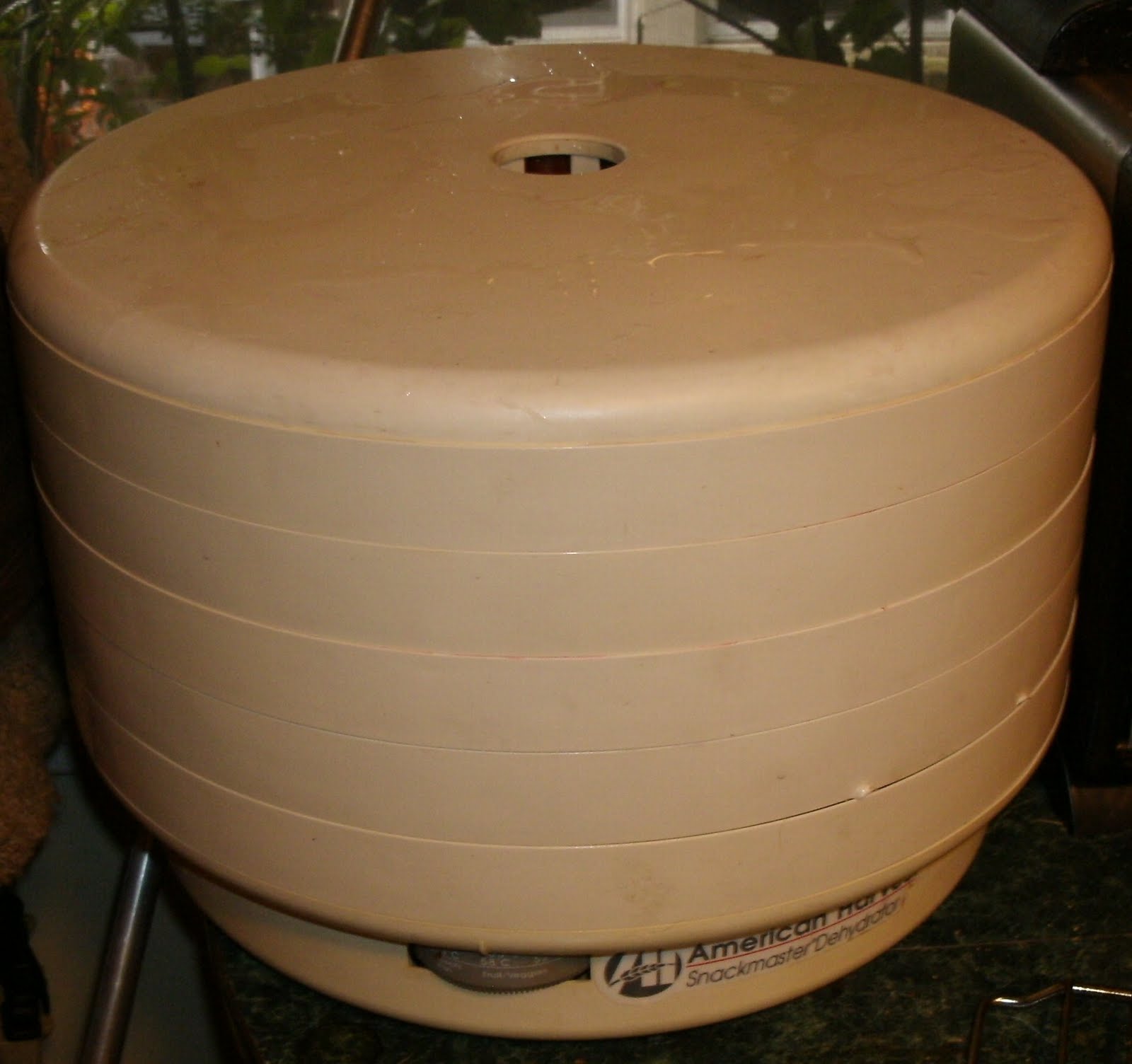
I bought this dehydrator about 20 years ago.  It's still kicking. Of course there are natural ways to dehydrate food; I'm currently dehydrating some elderflowers in my shed as we speak; but I digress.

Nearly Antique Plastic Dehydrator (I'm Getting Old. YAY!)
First, you clean and half the strawberries.  Mine were grown in Amish country (just a hop over the county line in Kutztown), and are natural and local.  Beautiful, aren't they?

You KNOW I Ate Some...
After you cut them, place them on the trays, seed side down.  NOT cut side down.  They'll stick.


Stack those trays up.  If you have multiple trays, you'll save energy, because it will take the same amount of time to do 6 as to do 2.  The trays weren't cheap, as I recall (it's been awhile), but they have more than paid for themselves.

Use the Proper Heat Setting
They shrink way down.  Down to 20% of their original volume, as I calculate...


I almost always dehydrate overnight, and that worked fine for these goodies.  I found that 5 quarts of fresh fruit equalled 1 quart of dried.  So I made 2 dried quarts for the winter.  That should hold us.


They taste wonderful: concentrated strawberry goodness.  I can just imagine them in oatmeal, on cereal, in cream-of wheat, or bread pudding...spring goodness in the deep winter. Yum.

Beauty is Only Skin Deep

 
By the way, the Farmer's Almanac has this tidbit to share about the aforementioned topic:

"The month of June's full Moon's name is the Full Strawberry Moon. June's Full Strawberry Moon got its name because the Algonquin tribes knew it as a signal to gather ripening fruit.
It was often known as the Full Rose Moon in Europe (where strawberries aren't native)."

Cool.

Saturday, April 23, 2011

Watercress

No, it's not just a topping for crustless toast, served at highbrow teas.  Watercress is a fresh, wild vegetable that makes a hearty addition to a foraged spring meal.

Swamps = Fountains of Life

Spring-Fed Goodness

The Cress
 When I was a little girl, my father used to come to the stream opposite this little swamp to catch minnows.  I remember how he'd set up his big kick net, then send me upstream to chase them down to him.  I've been visiting this spring-fed swamp for almost 50 years.
At one point, in my early childhood, someone kept a fenced area on the hill above it, where they held some white deer.  Those deer are long gone, but the spring remains.
In the green run-off, the watercress faithfully grows wild every spring.  Someone kindly brings palettes for the pickers, and lays them out strategically.
I gather a few bags each time I visit.  It rapidly replenishes itself if you just twist off the top few inches.

Rinsing the cress
My friend David tells the story of enjoying his first watercress salad of the season, only to find a snail attached, so I make sure to give the watercress a good rinse before storing.  Those of us who forage our wild foods know that we share them with all sorts of living creatures.  I try not to eat those critters in the process.

My first watercress meal of the season will be a potato, ramp and watercress soup, made with organic chicken broth and raw milk, and garnished with local bacon.  I'd call that a hearty spring meal!
-----------------------
UPDATE*****

Cream of Potato, Ramp and Watercress Soup. 
Oh, Yeah!
4 cups of chopped ramps
4 cups of cubed red potatoes
4 slices of bacon
4 cups of chopped watercress
4 cups chicken stock
1 cup of heavy cream
salt
yogurt

In a Dutch Oven, cook the bacon intil crisp.  Remove it and hold until later.  Add potatoes, ramps and cress to the pot, then saute until the greens are cooked.  Add the chicken broth, and simmer until the potatoes are soft. (I used a stick blender at this point to make the pieces smaller). Reduce temperature and add cream, them heat through.  Season with salt, as needed. Pour into bowls, and garnish with bacon and yogurt. Yummmmmmmmmm.  Welcome spring.

Ramps

The Stream
This is the day I wait for all year: my first ramp-hunt.  Now, I happen to have a tried-and-true, secret spot that I return to each year, but if you're looking for one of your own, try forested stream banks.  They seem to like a mixture of sandy soil and dark soil, but they definately like moisture.

A Ramp Riot
What's a ramp, you ask?  It's a wild growing allium, which you must recognize as a member of the onion or garlic family.  Also known as wild leeks, ramps offer a powerful blend of both the onion and garlic flavors.  A little goes a long way, so only pick what you'll use. They can be chopped and frozen, or pickled (though I haven't tried this).  Best of all, ramps are one of the first wild vegetables available in the spring, and the entire plant is usable. 

They look like Lily of the Valley.  DO NOT EAT LILY OF THE VALLEY!
When you begin to dig your ramps, you should notice that distinctive garlic-onion smell immediately.  I use a narrow gardening trowel to insert under the root, and lift it, as I use both the root and the leaf.  Smell those ramps; there's no mistaking them!  

Skunk Cabbage is Often Present at Ramp Sites

Turkey-Tail
Nature provides us with such beauty.  I'd wear this fungus like jewelry.  But I digress.

Ramps in a Basket
Take your ramps home, and give them a good bath to soak the remaining soil from their roots.


Each ramp root is covered with a thin membrane.  Simply push it forward...


To reveal your clean white ramp root.  Then snip it off.  A ramp bris.
That's all the preparation your ramps will need, initially.

Final Bath
When the ramps are all trimmed, give them a final rinse, then put them in a plastic bag or covered dish in the fridge.  When you've had enough fresh-ramp dining, chop the rest, and freeze in small portions for use over the winter.  There's nothing like the taste of ramps in the winter to remind you of spring!  They really liven up your winter root dishes!

Wash Water
Save all that rinse water for your garden.  The remaining soil can't hurt!  And since there's no soap or oil, it's perfectly fine for watering your cultivated veggies. 
Enjoy!

Tuesday, April 12, 2011

Nettles: My First Forage of the Spring

The Nettles
 The nettles I know live near a stream, on a low-lying flood plain.  I've known other nettles in the past, which also lived near water.  This may be because they like the moist land; or, it may be because that's where I walk and get nosy about the indigenous plants.  At any rate, if you're not careful, you'll never forget where they meet you the first time.  They can sting!  They have tiny little hypodermic hairs that deliver a nice dose of an irritant that will make you remember!  There are a few ways to deal with the burn: you can enjoy it (if you're a masochist), you can enjoy the relief from arthritis (if you have it and the pain distracts you), you can apply some dock, plantain or jewelweed (if you know what they look like), or you can cry and never go near it again.  I do NOT recommend the last option, because once tamed, nettles are a healthy and delicious addition to a forager's diet.
        Once you've identified them, wear gloves to gather them in the field.  I wore a glove on one hand and held my scissor in the other, and that worked well for me.  If your nettles are plentiful, just snip off the top section of the plant (4 leaves and stem) for the most tender dinner.


Nettles Soaking
  Wear rubber gloves to wash your nettles.  Transfer them to a pot of rapidly boiling, salted water to blanch them (for about 2 - 3 minutes), then plunge them into ice water to stop the cooking.  That'll take care of those stingers!  At this point, you can spin or towel them dry, and freeze them for later, or go on to prepare them like any other cooked green.


Chopped Nettles
 My original plan was to make some nettle noodles, but I ran out of time, so I decided to saute them with a few other greens I had on hand.  First, dandelion (I weeded the garden that day).

My Favorite Spring Plant: Dandelion

Dandelion Root: I Chop It, and Dry It for Tea

The Emerging Meal
 I added a handful of chopped kale to the nettle and dandelion mix, and sauteed it all in butter.  It needed a bit of moisture, so I used a splash of organic chicken broth.  There were a few leftover shrimp in the fridge, so they were tossed in, too. 

The Final Dish
And then, just for the color, I added a few chopped sweet red peppers,  Very festive!  And very delicious!  Peter and I both loved this dish.  I'll make it again. I can't wait to gather some more nettles!  Next stop: nettle pasta!

Sunday, April 10, 2011

Making My Mark

The concept of mark-making may have different meanings to some of my colleagues than others.  As an artist, mark-making refers to the visual representation of our particular chosen medium; now that I think of it, that may be a very good definition for anyone considering what it means to "make their mark".

For instance, I spent a good part of my day doing research for my (ultimate) graduate thesis.  That'll be a significant mark made in my life, as it will culminate one more educational life-experience and open the doors to others.  My particular research is focused upon the place a member of my extended family holds in history, so it has particular meaning to me; I feel the importance of doing this research and writing correctly.  Research and writing are my medium of choice in this instance.

Of course, teaching is a long-term process of mark-making; we teachers have the opportunity to affect so many lives!  Though I don't comment upon my teaching profession in this blog, it's very important to me, and the impact I have on the kids who need me gives me a feeling of great worth (right next to a feeling of great humility).  Though our government apparently doesn't share my sentiments, my intrinsic understanding of the impact one teacher can have on the life of a student at the right time, and under the right circumstances is obvious to me.  I lived it myself, both as a student, and as a teacher.  In that case, my media are pedagogy, artistic knowledge, and compassion.

What I do share with you is my garden: another place where I can coax my little seeds to grow.  It's springtime, and yesterday was the first solidly sunny and warm Saturday we've had this year.  My media are soil, labor, tools and seeds, and the mark I make will feed us throughout the coming seasons, and will provide a source of inspiration and thoughtfulness to me throughout the year.

A Blank Canvas
Like any work of art, we begin with a blank canvas.  We can control the quality of our canvas, and the craftsmanship we use, but there is always a beginning, a middle, and an end.  This wheel-barrel received a generous helping of well-composted horse manure this year.  A good canvas for the kale that will grow there soon.


Planning Ahead: Asparagus


This tiny asparagus shoot is the result of the planting I did last year.  As a second-year sprout, it's thin and small.  Each year will add girth and fecundity.  Some projects take longer than others, but they're usually worth the wait. There's nothing quite as good as asparagus.

Redcap Bed

Another bed that will take some patience is the hosta redcap bed I started this spring.  If I planned it correctly, I should have a harvest by fall.  As a lover of all things mushroomy, I have high hopes for this culinary masterpiece.  My work here is mostly done; the shade provided by the ornamental pear trees and hostas should allow the little fungi to do their thing.  I have such a tiny garden at home; the shade and ornamental shade-loving plants weren't pulling their weight.

The End of an Era

The whiskey barrel you see behind the plastic planter, has literally disintegrated.  It is currently the home of several garlic bulbs that I planted last fall, and as such will limp along until they're harvested.  In the meantime, both it and the new planter have been sewn with spinach, an early season crop.  When both the garlic and spinach are harvested, the whiskey barrel will also be harvested, and its soil used elsewhere.  This year's cherry tomatoes, a back-door favorite, will live in the new planter, complete with new, composted soil.  I expect a great harvest, based upon the harvest enjoyed by my friend Stephanie (who gave me the compost!).  The lavender plants, in the small pots beside it, are already showing signs of life.

Horseradish
One of my three remaining barrels is home to this year's horseradish shoots, which I'll be excited to watch grow.  I expect to companion plant some collards or chard with them as well, as this is a shady space.  The base of the barrel (and those next to it) have become my outdoor culinary herb area.  I started some thyme, parsley and sage today.  The rosemary is still indoors.  My medicinal herbs are primarily perennial; the various mints grow enthusiastically wherever I start them; the others (too many to name) are tucked in among the vegetables and trees.

Mint: A Fragrant Opportunist
Herbs are naturally enthusiastic.  I love that about them.  They're the street-kids of the plant world, and manage to thrive where they land.  I've placed several varieties right next to my picnic table, so I can enjoy them when I have my infrequent moments of repose in the yard.  Speaking of repose:


The Captain's Chair

And I'm the captain.  The third barrel is to the left, rear of my vintage lawn chair (salvaged from a curbside on trash day a few years ago). Strawberries grow around the barrel's base.  The white lattice behind it still supports an ornamental vine that hides my "lower 40"...a narrow alley between the hedge and the shed, where my scraps go.  There are two hostas that are sprouting behind the chair, and to the right of it, a clump of feverfew is getting a good start.  You can't see it, but it's flanked by lemon balm and spearmint.  And there's a rhubarb plant somewhere in there.

My husband constructed the planter from an old door two years ago, and after several false starts, I finally got a trumpet vine started in the right corner of it.  I have a few Jerusalem artichokes planted there (if the squirrels didn't get them), and some elderberries from last year.  Yes, I know they'll be big.  It's an experiment.  Though you can barely see it, there's an antique bell above the bed: a nod to my in-laws, who had it at their home in Oyster Bay, and used it to call Peter and his sister in from the woods.  What a life!

Stinging Nettle
There are those plants which shouldn't be cultivated in close spaces; one shouldn't attempt to raise a mustang or a tiger in the city.  So, in honor of those wild things that defy my intensive attempts at an urban masterpiece, I've included my new culinary addition for the spring: stinging nettle.  She grows nearby, and waits for me there.  I've decided to let her roam free; I'll come to her.  The story of our first cooking experience (I've dried her for tea) will follow shortly.

Spring commences; our most creative time.  We plant the seeds for a prosperous tomorrow, and if we're wise, we enjoy the work as much as the harvest.  We observe the growth, and it makes us smile...and hope.  Like a painting; like a student; like a garden.  Welcome, spring!

Faith's Kids

Wednesday, April 6, 2011

Welcome Spring

The soil calls me each year in mid winter. I can almost smell the earthy loam of fresh turned soil during those dark, cold months; the desire to hold handfuls of rich, promising soil becomes a hunger in me, a winter longing for sun, and rain, and heat. I ache for the springtime. I ache for the miracle of life.


Every February, I try my hardest to ignore the desire to plant. I put it off. I read about new varieties when the inevitable catalogs arrive, and I try to postpone buying the promised jewel-tone-illustrated seeds. I count my leftover seeds from the year before. I remind myself of the riot of gangly plants that clambered up my windows, long before it was warm enough to harden them off the year before. I set aside the early-birds: the peas and cabbages, broccoli and onions. I use what I have saved in the freezer, making room for this year’s crops. I make winter comfort foods; lacto-fermented, rooty, cheesy. My mouth waters for spinach and asparagus.  I eat the stored fruits of our last season.


And one day, I cave in. I plant a few seeds…then a few more. And I celebrate their germination like I would celebrate a pregnancy…new life, new hope! I watch the seedlings grow, planning my garden, anticipating those coming months of light and growth. I begin to find tiny plantlings pushing aside the leaf-mat in my garden. I clean up the yard, and make a few changes.


The spring kids arrive over a period of about 3 weeks, and my little plants grow into big plants. I set out the pea seeds, and find the feverfew and sweet woodruff. The horseradish sets up little tails fit their name. Overwintered garlic greens poke up, bright spring green among the wet black leaves. I set out the scallion seedlings, safe with bird netting to war off the hungry squirrels. I hope they’ll be warm enough; if the garlic is a sign of oniony spring, they will be.


The tomato plants overrun my sunroom, so I choose those I’ll keep for the summer, and bring the rest to school for the teachers. They’re hungry for spring too, and the plants are claimed in moments. The donations they give will benefit a needy student. These tomatoes will give twice this year.


Dandelion is waiting to be harvested; my comfrey has returned, and the soothing mullein is showing its downy-green lamb ears. Tonight, and all future nights from now until October or November will have temperatures above freezing. Once again, we’ll travel together from seed to table; the earth will yield up her magic; the scents of spring are calling me to the woods and pastures, where her miracles are growing. We are blessed. We have been waiting.