Showing posts with label farming. Show all posts

Tuesday, June 14, 2011

Squash Blossoms; a Guilty Pleasure

Squash Season is Coming!!!
This is admittedly NOT the plant I took my male blossoms from; that plant had a huge headstart, being grown in the high tunnel, however I didn't plan ahead and neglected to photograph it.  Them.  They're taking over. (I'll insert a picture here at a later date!)

Squash blossoms are an early summer delicacy.  I only pick the male blossoms, the ones without the ovary attached (swollen base), because that's what will eventually become your squash.  And I only take a few; they're a guilty secret. For this recipe you'll need a simple egg batter (like the one you use for pancakes), a stuffing, some vegetable oil, and some salt.


Open the blossom, then remove the pistol.  Or is it the stamen?  I don't remember.  Remove the phallic polleny thing in the middle.  It will be bitter if you don't. Stuff the flower with something you love: crab, shrimp, mushrooms, cheese; I chose fresh mozzarella, because that's what I had. Wrap the blossom around the filling.  Really tuck it in.


Heat up your oil and get a plate ready with paper towels to catch the drips.  Dip the entire blossom in the batter, and make sure the petals stay around the filling as you rotate it for coverage.  I found it easiest to do by hand, but if you grip the open end of the blossom with a pair of tongs, you may be able to finesse it into compliance without messing up your manicure.  Having no such manicure, I wasn't terribly concerned about using my hands.  Place them in the hot (but not smoking) oil. The stuffed blossoms.  Not your hands.


Make sure to turn them as they get brown.  Don't fuss with them too much or you'll lose your stuffing.  Well, they will...not you. 

These are NOT chicken wings.  Meat-free goodness.
Drain on paper towels or whatever you use for lapping up oil, then salt to taste and enjoy.  If you have a favorite dipping sauce, now's the time to break it out.  I used harvard beet glaze, because that's what I had.  And that was just fine.

Enjoy!

Sunday, April 10, 2011

Making My Mark

The concept of mark-making may have different meanings to some of my colleagues than others.  As an artist, mark-making refers to the visual representation of our particular chosen medium; now that I think of it, that may be a very good definition for anyone considering what it means to "make their mark".

For instance, I spent a good part of my day doing research for my (ultimate) graduate thesis.  That'll be a significant mark made in my life, as it will culminate one more educational life-experience and open the doors to others.  My particular research is focused upon the place a member of my extended family holds in history, so it has particular meaning to me; I feel the importance of doing this research and writing correctly.  Research and writing are my medium of choice in this instance.

Of course, teaching is a long-term process of mark-making; we teachers have the opportunity to affect so many lives!  Though I don't comment upon my teaching profession in this blog, it's very important to me, and the impact I have on the kids who need me gives me a feeling of great worth (right next to a feeling of great humility).  Though our government apparently doesn't share my sentiments, my intrinsic understanding of the impact one teacher can have on the life of a student at the right time, and under the right circumstances is obvious to me.  I lived it myself, both as a student, and as a teacher.  In that case, my media are pedagogy, artistic knowledge, and compassion.

What I do share with you is my garden: another place where I can coax my little seeds to grow.  It's springtime, and yesterday was the first solidly sunny and warm Saturday we've had this year.  My media are soil, labor, tools and seeds, and the mark I make will feed us throughout the coming seasons, and will provide a source of inspiration and thoughtfulness to me throughout the year.

A Blank Canvas
Like any work of art, we begin with a blank canvas.  We can control the quality of our canvas, and the craftsmanship we use, but there is always a beginning, a middle, and an end.  This wheel-barrel received a generous helping of well-composted horse manure this year.  A good canvas for the kale that will grow there soon.


Planning Ahead: Asparagus


This tiny asparagus shoot is the result of the planting I did last year.  As a second-year sprout, it's thin and small.  Each year will add girth and fecundity.  Some projects take longer than others, but they're usually worth the wait. There's nothing quite as good as asparagus.

Redcap Bed

Another bed that will take some patience is the hosta redcap bed I started this spring.  If I planned it correctly, I should have a harvest by fall.  As a lover of all things mushroomy, I have high hopes for this culinary masterpiece.  My work here is mostly done; the shade provided by the ornamental pear trees and hostas should allow the little fungi to do their thing.  I have such a tiny garden at home; the shade and ornamental shade-loving plants weren't pulling their weight.

The End of an Era

The whiskey barrel you see behind the plastic planter, has literally disintegrated.  It is currently the home of several garlic bulbs that I planted last fall, and as such will limp along until they're harvested.  In the meantime, both it and the new planter have been sewn with spinach, an early season crop.  When both the garlic and spinach are harvested, the whiskey barrel will also be harvested, and its soil used elsewhere.  This year's cherry tomatoes, a back-door favorite, will live in the new planter, complete with new, composted soil.  I expect a great harvest, based upon the harvest enjoyed by my friend Stephanie (who gave me the compost!).  The lavender plants, in the small pots beside it, are already showing signs of life.

Horseradish
One of my three remaining barrels is home to this year's horseradish shoots, which I'll be excited to watch grow.  I expect to companion plant some collards or chard with them as well, as this is a shady space.  The base of the barrel (and those next to it) have become my outdoor culinary herb area.  I started some thyme, parsley and sage today.  The rosemary is still indoors.  My medicinal herbs are primarily perennial; the various mints grow enthusiastically wherever I start them; the others (too many to name) are tucked in among the vegetables and trees.

Mint: A Fragrant Opportunist
Herbs are naturally enthusiastic.  I love that about them.  They're the street-kids of the plant world, and manage to thrive where they land.  I've placed several varieties right next to my picnic table, so I can enjoy them when I have my infrequent moments of repose in the yard.  Speaking of repose:


The Captain's Chair

And I'm the captain.  The third barrel is to the left, rear of my vintage lawn chair (salvaged from a curbside on trash day a few years ago). Strawberries grow around the barrel's base.  The white lattice behind it still supports an ornamental vine that hides my "lower 40"...a narrow alley between the hedge and the shed, where my scraps go.  There are two hostas that are sprouting behind the chair, and to the right of it, a clump of feverfew is getting a good start.  You can't see it, but it's flanked by lemon balm and spearmint.  And there's a rhubarb plant somewhere in there.

My husband constructed the planter from an old door two years ago, and after several false starts, I finally got a trumpet vine started in the right corner of it.  I have a few Jerusalem artichokes planted there (if the squirrels didn't get them), and some elderberries from last year.  Yes, I know they'll be big.  It's an experiment.  Though you can barely see it, there's an antique bell above the bed: a nod to my in-laws, who had it at their home in Oyster Bay, and used it to call Peter and his sister in from the woods.  What a life!

Stinging Nettle
There are those plants which shouldn't be cultivated in close spaces; one shouldn't attempt to raise a mustang or a tiger in the city.  So, in honor of those wild things that defy my intensive attempts at an urban masterpiece, I've included my new culinary addition for the spring: stinging nettle.  She grows nearby, and waits for me there.  I've decided to let her roam free; I'll come to her.  The story of our first cooking experience (I've dried her for tea) will follow shortly.

Spring commences; our most creative time.  We plant the seeds for a prosperous tomorrow, and if we're wise, we enjoy the work as much as the harvest.  We observe the growth, and it makes us smile...and hope.  Like a painting; like a student; like a garden.  Welcome, spring!

Faith's Kids

Tuesday, March 15, 2011

The Old Dog, the New Kid, and the Long Drive Home

Well, apparently you CAN teach an old dog a few new tricks.

The Nubian doelings (Faun and Fiona), though small, are doing well.  Their appetite is beginning to become more vigorous, an important part of barn life.  As it's been since moments after their birth, their brother, Frankie is leading the little Nubian herd in terms of vitality.  His loud, insistent cries cannot be ignored at feeding time, just like his mama Faith's.  Nubians do have distinctive voices!

Last night, when I arrived at the barn after school, little Frank bounced over to greet me, yelling all the way to the stall gate.  He screamed for dinner while I milked Faith, screamed while I got hay, and then drank an entire 16 oz. bottle of his mama's milk.  And I still heard screaming, which sounded just like him; therein lies the REAL story for today.

Nubian voices are piercing; the little voice I heard was equally piercing, so I followed it to its source: a fairly large Toggenberg kid was under the manger, apparently unable to extract itself.  I pulled her out, and set her under her dam to nurse...and she fell over.  He rear legs were immobile and cold, stiff to the touch.  After trying to work them a bit, I concluded that she must have been injured in the stall somehow; those clammy, wet legs were lifeless. I bundled her in my coat, and she occasionally let out a bleat, getting weaker now; her head flopped to the side.

After showing Kathy the kid, and discussing the situation, we came to the conclusion that she must have had her back broken sometime during the day; she had been a vigorous eater just yesterday!  We opted to do the humane thing, so I wrapped her in a towel, placed her on the seat of my truck, and headed for the vet; I nearly turned back once, as she had become unresponsive.  I thought nature had taken its course, but a flutter of her eyes told me differently.

When I arrived at the veterinary clinic, the vet happened to be in the lobby.  I told him who I was, and that we had called ahead.  He asked me to put her on the floor so he could take a look.  He lifted her up, and though she didn't move her legs and fell right over, her tail waggled; this was NOT a broken back!  This baby had been neglected by her dam for just one day, and had come very close to death.  Apparently, when malnourished, a newborn kid will have trouble maintaining its body temperature in cold weather.  Our baby was slowly dying right before my eyes...but there was hope.

The doctor taught me how to use a gastric tube to feed her.  I have never done this before, but when circumstances demand it, we can do nearly anything to preserve these little lives, can't we?  He told me it was crucial to get her temperature back to normal, and to get warm milk into her belly.  I bundled her up, got into my truck, and headed out.

I knew that everyone at the farm thought she was a goner, and I was desperate to tell them otherwise, so I did what I know is wrong to do: I used my cell phone while I was driving.  I had a starving, hypothermic kid beside me, the means of saving her, and no time to spare.  I thought it was warranted.  Apparently the police officer who saw me try to make that call thought otherwise; luckily, he was in an exit lane at the time, but he did cut through a parking lot to tail me...and tail me he did, for the next 8 miles; he was wily; he exited and reentered on a second short ramp, then paced himself just behind me...but I saw him back there and behaved myself.  With one hand on the kid, and my eye on my rear view mirror, I quit trying to call the farm and headed for home (just under the speed limit!), where I knew I had the time and supplies I needed.  I ditched the officer about a mile before I arrived, and blew into the house, kid-in-coat, to begin working on her.

.....to be continued... (photos to follow)

Friday, February 4, 2011

PASA

This conference has become my new mid-winter ray of sunshine.  Despite the blizzard that stranded me here last year, and despite the impending Saturday snowstorm this year, I look forward to PASA to give me hope (and ideas, energy, and a righteous indignation) for the following year.

Out keynote speaker this morning, Wes Jackson, might as well have been in a pulpit, as far as my spiritual beliefs are concerned.  A beautiful blend of science, history, philosophy, poetry, biology and spirituality went into his talk on the evolution of our current state as carbon consumers, with realistically non-optimistic (but hopeful) overtones.  Read the book, or buy the CD of his lecture from PASA; Jackson spoke to my understanding of life as we know it on our planet, without denial or romanticization.  We were in tears when he finished.  His book, Consulting the Genius of the Place like many current writings in post-modern ideology, speaks to the individual voice, the small voice, as it  is expressed in the bigger picture; more on this as I continue reading.

That, my friends, seems to be the pervasive theme; we are individuals who are empowered to create change in a time of global change.  And though i have much more to say on the matter, I had 5 hours of sleep last night, and did so much today...so...
stay tuned for more
PASA-bilities.

Thursday, January 20, 2011

Dinner from the Freezer, Organic Style

It's January, and after a long, hot summer, a frantic fall, and an equally frantic holiday season, we're all settling into the winter doldrums.  NOT SO! Unfortunately, I don't have pictures, but we had summer for dinner tonight:

Fresh (frozen) local organic sausage roulettes, garden grown kale in a wild oyster mushroom cream sauce, oven baked sweet potatoes (Amish grown), and frozen strawberries (from the market last summer) over homemade, raw-milk ice cream.  And it all took about 40 minutes, and came from my freezer and pantry.  Yahoo!

I think I'm beginning to like winter!

Wednesday, January 12, 2011

Butternut Squash Bisque: From the Field to the Table

Soup on a snow day!

Since I had an unexpected day off today, I was in the mood to cook, and since there were 6 inches of snow on the ground, to cook from food I had on hand.  Winter squash proved to be just the thing!  I chose a butternut squash and an acorn squash from my stash, and got to work.


These different varieties of squash have lived in my pantry since late October.  Luckily, we keep the house rather cool, and they're out of the sun, along with the potatoes and onions (though that didn't keep the potatoes from sprouting eyes, as you can see from my previous post!).  I either grew them or bought them from the Amish stand near my mother's home in the Kutztown area. They're all still perfectly fine; not a soft spot on any of them.


 I began by peeling the butternut squash with a carrot peeler, which was simple and efficient.


Just look at that bright, moist flesh!


I didn't think there would be so much good  flesh in one little squash! The recipe called for 4 cups of cubed squash; I had at least 5, so I put back the acorn squash for another day.


I've been using Amish roll butter lately, since it's fresh and local. And oh, so good!  I diced a cup or so of sweet onion and a cup or so of local, organic carrots.  The onions went into my Dutch oven with a tablespoon of butter to saute until soft; then I added the carrots and squash, some chicken stock (the recipe calls for vegetable stock, but I only had chicken), and seasoned it with salt, pepper, and nutmeg.


I shave my own nutmeg.  It just tastes better.  And the "nut" has pretty patterns inside.


It simmered for about a half hour while I took a shower and made some bread pudding.  I just love stale bread!  But that's a story for another day. When the vegetables were all soft, I let it cool, then pureed the whole beautiful mess in my food processor.  I added a half-cup of buttermilk to the processor (fresh from the farm) instead of cream, 'cause that's the way we roll around here.  I returned the rich, creamy, orange puree to the Dutch oven, then I heated it gently...not to a boil, and ladled it into two bowls. The final touch was a tablespoon of buttermilk dropped into the center of each bowl and fanned out with the tip of a knife just before serving.  Voila!


Now that's a healthy, warming meal for a snowy day!  Fresh from the field to my table.  Thank you, Mother Nature!  And thanks for the snow day today!
You can find the recipe that inspired this soup right here.

Saturday, November 27, 2010

A Trade

Thanksgiving is over, and the bounty has been shared; just this evening, Kathy graciously gave us a bag of home raised, humanely nurtured pork for our freezer.  I'm so grateful.  I never expected such a treat.

Now, these were some happy pigs.  Apart from the West-Side cow incident a week or so ago (I still have to laugh at that; I'm a little twisted), those pigs had it good.  Here's the recap (Nov. 14th blog):

"Last weekend, my friend El and I visited the farm together so she could see our newborn calf. One of the volunteers had forgotten to shut the gate between the cow field and the pig run, and chaos ensued. I have never seen cows band together like a street gang and attack before; usually they just mill around, benignly grazing and mooing. These cows were pissed! They attacked those poor pigs enmasse. You've never seen fat pink buttocks running away more frantically. I'm ashamed to say that I can't stop laughing about the visual memories it brings up: think "West Side Story" (the Jets and the Sharks). Those poor piggies! Thankfully, the vet and his assistant were on site, checking out the goats, and between the 4 of us, we were able to break up the rumble. The piggies had to take a long nap that afternoon."


And although I've been hearing endless conversations about being vegetarian vs. being a carnivore (omnivore), and I understand both the philosophical and environmental implications, I am, without doubt, an omnivore.  I do hold myself to ethical standards when buying my food, however. These pigs had a good life, as do the chickens whose eggs we eat, and the goats and cows whose milk we drink.

So, in order to make room for the ham, sausage and pork shoulder, we had to go spelunking in the freezer.  I know how much we'll want the greens this winter, so they were off limits.  I decided to pull out two quarts of cantaloupe sorbet, a bag of tomato something-or-other which I'll make into a stew, and a quart bag of black elderberries.  Elderberries!!!! We picked them and froze them this summer!


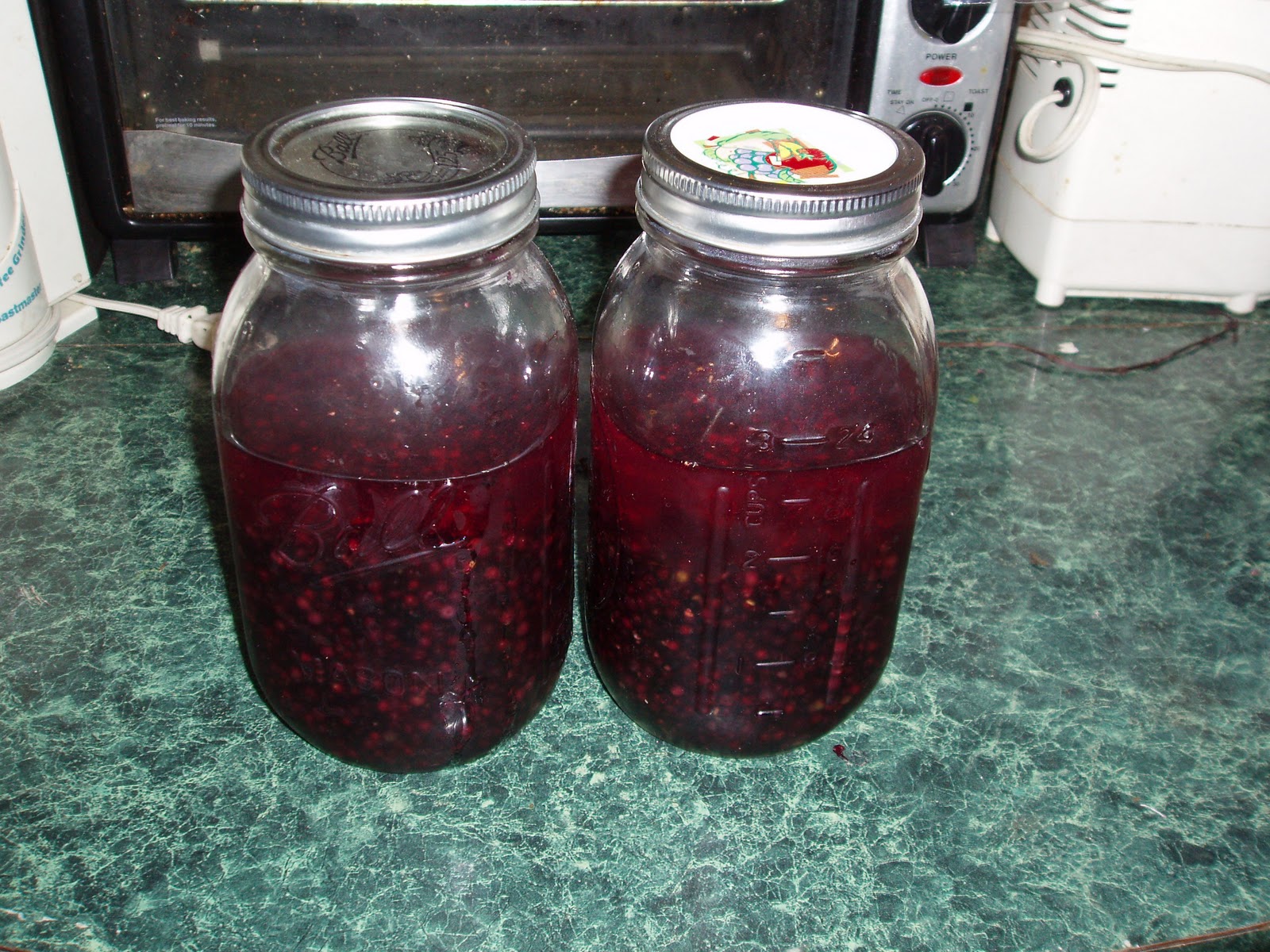
Flu season is coming, so I sent Peter off to the liquor store for some 100 proof vodka to make a tincture.  It can't be easier...50% berries, 50% alcohol, let rest for 2-3 weeks, then sip as needed; as preventative medicine, the suggested dose is a tablespoonful in the morning and evening.  Strain out the berries unless your bowels are bound up (then eat a few...it'll do the job).  And elderberries are good!  If you're more interested in sweet things, elderberry syrup has the same healing properties.  You can find many recipes for it on the web.


So, Miss Kathy can expect some elderberry tincture and some cantaloupe sorbet for her generosity.  And we'll be eating a local ham for Christmas.  Farm life is good, even here in the city.  We're blessed.

Sunday, November 21, 2010

Turn, Turn, Turn

Happy Sunday; we enjoyed one of our final convertible mornings today, as we left the Emmaus Farmers' Market.  The sun was bright, and the fall colors were stunning:

Fractal Vegetables
I couldn't help shooting a few pictures of the wonderful fresh foods I'll be missing soon.

Roots
From technicolor roots to deep green leaves, my body felt stronger just looking at them!  Some will surely go into our Thanksgiving meal, though we're not having a traditional one this year.
Those Greens...
Oh, Those Greens!
 There is light at the end of the (high) tunnel, though.  Kathy's greenhouse is up, and I have a book: The Winter Harvest Handbook, by Eliot Coleman.  If I can get someone to do some rototilling, we might just have some greens in January and February.  We'll see.


Lunch
 In the mean time, Peter and I had some greens for lunch at the local Vietnamese place; the real reason I took this picture was because I was fascinated by the little altar inside the counter behind him.  There was an incense pot in front of three little Buddha-like figures.  I thought it might be rude to openly walk up to it and photograph it, but I'm intrigued, nonetheless.  We had spring rolls, chicken pad Thai, and hot and sour soup. Yum.

Then a short ride in the country: A hidden park on the hills behind Emmaus.

Delicate Pink Leaves

Winter is Approaching
 The sun was obscured by November clouds as we made our way home.  We'll spend the day quietly feathering our little nest; baking, reading, writing.  The dark months give is time to ponder, and prepare ourselves for a new year ahead. We slow down, tuck in, and dream.


Saturday, September 18, 2010

Snapshot: This Moment. 9-15-10

This "Snapshot Moment" was inspired by THIS blog.

My Wednesday ritual; a trip to the Amish farmland. I'm taking a course at Kutztown University, which is minutes away from my mother's apartment.  The few miles between Kutztown and Fleetwood offer me a much needed respite from my harried life.

On a cool, sunny pre-autumn afternoon, I went in search of a corn field for a photograph of the corn stalks.  I found so much more.  The air was brisk and clear, with a slight breeze and welcome warm sun. I pulled over near these Jersey girls.

Quietly munching in the early evening air, they paused to watch me, watching them. 

Shhhhh...


Curious and calm, they cautiously approached; the breeze blew, and the outside world was silent save for the tearing of grass and the chewing of cud. Liquid black eyes blinked slowly, then looked back to the grass.  Comfortable. Doing what cows do.


A few feet away, the corn stalks rattled in the breeze like rain.  I wanted to lie among them.  I wanted to sleep with my head at their feet.  I took a deep breath, closed my eyes, and just listened, and time stood still.

I suspect it does that often here, on the Amish farmlands; it's a peaceful vortex, a welcome anomaly.  Filled by the richness of tradition and the rhythms of the seasons. It's a place where I can catch my breath; and I did.

Monday, August 16, 2010

Goschenhoppen Part 1: Women's Work

What have we traded for the long days of hard labor required for survival, just a century ago? I've been thinking about that lately; most of us don't spend entire days preparing a meal or putting up seasonal foods anymore.  Most of us don't spend our evening hours or our winter days stitching, sewing, and weaving. Most of us have more lofty things to do.  We have careers, we have places to go, we have movies to watch, social obligations, networking to do...


Alice (on the right), her sister and daughter; more about her (Alice) later.
We don't spend entire days weeks months lifetimes elbow to elbow with our daughters and sisters. We don't know each other as firmly and deeply as we once did. One might argue that the advances made in our industrialized world have freed us from domestic slavery.  One might argue that the drudgery of "womens' work" has been lifted from us, and we've been liberated of that burden. I understand those arguments, having lived a relatively independent and productive life.

That being said, I wonder what understandings were met over the open mouth of a steaming canner. I wonder how many soul-searching conversations occurred when the biscuits were being cut, how many family stories were passed to younger generations along with the apple peels, how many moments of compassion fed our hearts as we were making butter from fresh, raw milk. How much familial intimacy was put aside in favor of a quicker, "easier" life?

I don't know.  I've primarily spent my domestic times alone; those brief interludes accompanied by friends or lovers are the exception, and I've found them to be either heart-warming or annoying, depending upon the grace of the person sharing my space.  But what if it wasn't MY space?  If the kitchen (the heart of the home) was the place where the collective women of the family shared THEIR hearts and hopes, wouldn't it be a place of comfort, rather than drudgery?

Working with flax; that's a smile I see, and a younger woman learning from one with experience.
 How precious each item we created must have been; ours wasn't a throw-away culture when a week went into the creation of a shirt, or a month into a table.  That rough-hewn table was as precious as a Chippendale sideboard to the family that made it and used it daily.  Every bit of cloth was used and reused until it was all used up; every bit of cut wood became something useful: furniture, tools, fuel.  Recycling was the norm, rather than a choice to make.

Now, I understand that life was harder; we toiled under the sun, we died in childbirth, we suffered from medical conditions that are now curable.  Advances were made as our society freed us to do the intellectual work that was necessary to advance in the arts and sciences; but there's always a price to be paid, a trade-off. In my nostalgic moments, I still long for a simpler life; a life of connection and meaning. Of simple, honest hard work.

Every child is precious.
 What price, a large family?  In those days, the children were contributing members of the family as soon as they could walk.  They were taught the skills that held the family together: animal husbandry, food preparation, domestic arts, farming, building.  They were born into a tightly knit group that functioned (ideally) as a cohesive whole, each participating in the well-being of the other.  There were familial norms and expectations, and I'm sure there were times that were less than perfect, but everyone was a part of something (the family) that was vital and alive.  To leave a family must have been a very difficult thing, regardless of the circumstances, in those days. I consider my own flight from home at 18 years old, and what little difference it made in the daily function of my family; I'm sure it would have meant more if I had been milking the cow, canning, gardening and tending the chickens as part of my daily contribution. Perhaps, with all of those responsibilities, a young person might have more of a sense of belonging, more of a sense of "duty", and not desire so much to be "on their own". "On your own" would be difficult, if not impossible, without the technological advances we enjoy. 

Making pockets; ladies' garments didn't have pockets built in.  These were worn under the apron.
I long for a simpler life.  I'll admit it. I could happily live in more humble digs, and occupy my days with constant creation, whether that meant pickling or painting.  At this point in my life, I'm just about calm enough to enjoy the change of the seasons, and the warmth of a fire as much as I enjoyed a trip to New York or a Broadway show a decade ago. I'm sure my concept of earlier times is romantic; I'm sure there were desperate, difficult times.  But from where I sit, the smell of a cooking fire and a freshly baked pie would be wonderful.  The hours spent sewing a quilt, wonderful.  And the deep, healing sleep after a long day of honest work...wonderful.

Goschenhoppen brings me a taste of that, each year.  Goschenhoppen time-travel magic.  More tomorrow; a story of not-so-distant time travel, and a story of the ripples that one small kindness can create over time.

Tuesday, August 10, 2010

Mincemeat and Philosophy


I'm back to my usual goat-milking, after three-plus weeks of recovery.  It's so nice to be with my girls again! And the kids have grown so!  Here's a shot of a few of them coming in from the field.
Cute Kids!
While I was away, I did a lot of canning...and dishes...and canning...and dishes.  Perfect PT for an ailing hand.  I'm almost 100% now, thanks to my lack of a dishwasher!  AND...I have a pantry full of summer goodness. 

Tomato Sauce...and A Great Book

Yesterday's addition was a batch of green-tomato mincemeat.  Now, I've always enjoyed mincemeat pie, but was a bit reticent to truly examine the ingredients.  I followed the recipe provided by the authors of "Putting Food By", which has become my constant kitchen companion these days, and I can tell you that the main ingredients in mincemeat (at least this recipe) are NOT minced meat.  Green tomatoes and apples.  That's right folks...mincemeat pie (green tomato mincemeat pie) contains primarily fruits and seasonings.  The recipe also calls for a cup of suet, but provides substitutions (butter!) for the vegetarians among us.  I went whole-hog (so to speak), and decided to include the suet.

Having read a few things about foods and nutrition lately, I was aware of how powerful fats are in our diets.  In previous cultures, fats were prized and coveted due to the energy they provided; unfortunately, we also know that they store all sorts of things; hormones, antibiotics, etc.  So, in order to include any sort of natural fat in my mincemeat, I needed to purchase it from a reputable source.

I found my good, clean suet at the Emmaus Farmers' Market. My meat vendor took my order for a pound of beef fat, and promised it for the following weekend.  When 10 AM on the following Sunday morning arrived, I was there waiting for him.  Unfortunately (or fortunately, as it turns out), he hadn't butchered during the week, but had brought me a pound of pork fat instead.  It was clean, white, pork suet, harvested from a happy, grass-fed, hormone and antibiotic free pig. 

Clean Pork Suet

Regardless of our vegetarian or non-vegetarian status, and all of the personal philosophy involved, I do believe that above all, we need to respect and give thanks to the sources of our food.  Respecting the sources of our animal-based food includes treating the living animal with love and compassion.  Our foods carry the energy we need to survive, whether they're beefsteak tomatoes or  just plain beef steaks.  That energy is more than simple calories we use to fuel our engines.

Reading "Full Moon Feast" this summer has made me increasingly aware of the interconnectedness of our various energies in the cycles of life.  My decision to include a cup of suet in my mincemeat pie canning didn't come lightly; it came with much contemplation and out of respect to wholesome traditions of harvest and agrarian culture. 

It's delicious.  Perfectly seasoned, spicy and nicely textured.  I can't wait to make a pie to share with whoever is at my table.

I hope each of us can enjoy the fruits of our harvest, whatever we have planted or grown; that each of us gives back more to the earth than we have taken (a monumental task, if you consider the waste we each produce), and that we bless and give thanks for her gifts in ways that follow our own cultural and spiritual traditions.  Despite our desperate economic climate, we are living in an abundant world, and need to live mindfully. I'll think of that every time I open a can of food I have put aside for the winter, while I wait for those first tender shoots of spring. In the mean time, I'll keep canning...and giving thanks to the earth for her bounty.
Mincemeat Pie Filling

Thursday, July 22, 2010

Thumbs Up!

This is a great discovery.
No, not my thumb.  I discovered that a long time ago.  Vet Wrap.  Brilliant.

For anyone who has suffered the gross indignity of being confined by an increasingly disgusting cast or wrap, have I got a tip for you! While I was visiting the farm this morning, Miss Kim, the riding instructor took me under her wing.  I was complaining about my dirty, dingy wrapped splint, and a light went off in her eyes: Vet Wrap. OMG!

Not only is it water resistant, colorful (MANY colors to choose from) and inexpensive (mine was $2.25 a roll), it's CLEAN! Bonus!
What can I say? My farm friends rock.

Here are the labels, if you need to Google them.  Otherwise, find a farm supply store (equine section), and have a blast.  You can make your recuperation a fashion statement!

Thanks, Miss Kim!

Sunday, July 18, 2010

I Think I Can...Can (Peach Canning Tutorial)

Despite my slower self these days, the garden is producing like crazy.  On our first visit back, we brought home an armload of goodies; even though I had invited my garden helpers to take what became ripe during our absence, "ripe" is a daily occurrence now. The farm markets are prolific and tempting as well; Peter loves peaches, so we bought a basket to preserve for the winter. Yesterday, in addition to the sweet peppers and corn we bought for our dinner (my peppers aren't red yet), I bought a bag of plum tomatoes for confit.

I love confit.  Can't get enough of it.

I'm dying to dry some corn for the winter.  I do it on a large, old fashioned corn drier.  I first encountered these back in my hippie days when I lived on the farm in Stonersville (no joke, that's what it was called...near Reading, PA. Google it.) The drier was meant to be used on an old fashioned cook stove, which we had then, but I don't have now.  When I found one at an antique store, I bought it anyway; and it works just fine on my gas range. More about that later; I'm saving my corn-drying for later in the season.

Today will be all about peaches!
* Your jars should be in your canner, getting a boiling bath!
Step 1: Wash those sweet peaches!

Step 2: Pull out the soft or bruised ones, cut them off the pit and throw them in your crock pot (on low). Tomorrow, this will magically become peach butter!


Step 3: Dunk your firm, ripe, luscious peaches into boiling water for a few minutes to loosen the skin  (approx. 3-5 minutes...experiment), then immediately transfer to ice water.


Step 4: Skin and slice the peaches, then put in a citric acid bath.  Plain old lemon juice with water works fine; just 1/4 cup of lemon juice. Or you can use a commercial fruit freshener.  I used citric acid because I have some for making fresh cheese. This will keep your fruit from discoloring.


Step 5: Make your syrup.  I chose a medium syrup, which was 1 part sugar to 2 parts water.  Here's a good chart (and site) for you if you want more details. When your syrup is just barely boiling, put in your peaches.
* Your jars should be removed from the canner at this point, so they stay hot and sterile.


Step 6: Place peaches in the sterile jars.  See the site for canning details (I'm typing with 2 fingers of my left hand.  I'll explain why in tomorrow's post.) Add syrup to fill jar, leaving 1/2" head space.

Step 7: Clean rims and place sterile lids and metal rings on jars (finger tight). Place jars back in canner.  See website for processing times.


Step 8: Remove and let cool.  Don't fool around with the jars until tomorrow; then check the tops.  If the little dimple in the middle is down, you have a seal. Like these:

Yum!  Open whenever you want a taste of summer...like in February!  Or even next week, if you're greedy!
Tomorrow: Peach butter!
(P.S. All your peach scraps and any leftovers except for pits can go in the crock pot. Leave it on low overnight; stir occasionally.  My crock was full.)